Dawlat Ahmadzai identifies regional HPC centres as key to Afghanistan's cricket development
The newly appointed Afghanistan Cricket Board HPC Manager outlines a three-to-five-year plan to decentralise high performance and build a unified national player-development pathway.

4 Min Read
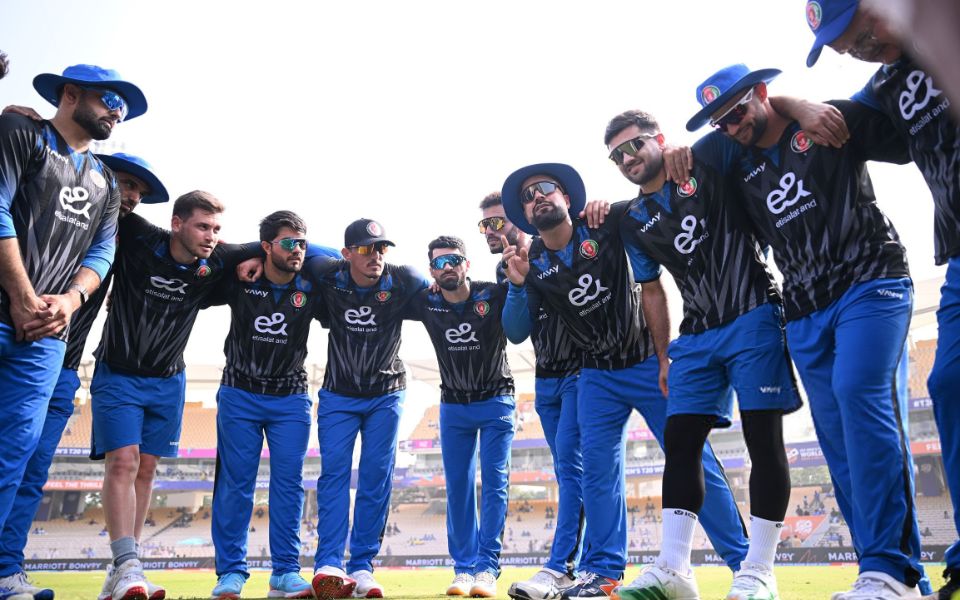

Dawlat Khan Ahmadzai, the newly appointed Manager of the Afghanistan Cricket Board's High Performance Center, has outlined an ambitious plan to decentralise high performance by establishing regional HPC centres across the country. His primary vision is to move cricket development resources beyond Kabul and bring coaching, strength and conditioning, sports science, medical support and performance analysis closer to players in different regions.
The Afghanistan Cricket Board built its High Performance Center in Kabul to provide training camps and skills-development programmes. Ahmadzai, a former Afghanistan all-rounder who represented the national side in ODI and T20I cricket between 2009 and 2010, has now taken charge of that facility and spoken to Cricbuzz about the direction he intends to take it.
"My first priority after taking over the High-Performance Center was to establish a clear, professional, and sustainable high-performance system. I understand Afghanistan cricket from the inside because I have served the game for the last 26 years in different capacities. Based on that experience, I proposed to the top management that the HPC should become the central part of a structured player-development pathway, rather than functioning only as a training facility," Dawlat said as quoted by Cricbuzz.
"Afghanistan has a tremendous amount of talent. But talent alone is not enough. We need a system that identifies talent early, develops it according to individual needs, continuously monitors progress, manages injuries properly, and prepares players for the physical, technical, tactical and mental demands of international cricket," he added.

Harshit Rana out of Afghanistan T20Is and Asian Games
Why does Ahmadzai want to decentralise Afghanistan's high performance system?
Ahmadzai believes that concentrating all high-performance resources in Kabul limits the reach of the development system and leaves talented players in other regions without adequate support. He has proposed the creation of Regional High-Performance Centers, referred to as RHPCs, to address this gap directly.
"The biggest change I want to bring is to decentralize high performance through regional HPC centers. Afghanistan has talent across different regions, and we need to take high-performance resources, coaching, S&C, sports science, medical support and performance analysis closer to those players. This will strengthen the regional pathway and create a much larger and more sustainable talent pool," said Ahmadzai.
Alongside the regional expansion, Ahmadzai wants to formally connect the HPC to the player-selection process. He also addressed the broader role of the HPC in relation to the national team
"The second major change is to formally integrate the HPC into the player-selection and progression process. I believe the selection panel should receive a written HPC performance report on relevant players, clearly stating whether a player is ready to compete at the next level, needs more development, or should remain at the main HPC or a regional center for further preparation," said Ahmadzai.
"I believe the HPC can make a major contribution: improving the performance and long-term development of national-team and centrally contracted players. The HPC should not operate as a separate department from the national team. My vision is for the HPC, national team and domestic system to work as one integrated performance system, with clear communication, shared objectives and defined responsibilities. For me, a successful High-Performance Center is not defined only by how many players it produces for the national team. Of course, producing international players is one of the most important measures of success, but the HPC has a much broader responsibility," he added.
What is Ahmadzai's three-to-five-year plan for Afghanistan cricket?
Ahmadzai has set a three-to-five-year implementation timeline for his goals. A central concern he has identified is the lack of continuity across the existing player pathway, where movement between levels often means development progress is lost rather than built upon.
"The biggest issue I see is continuity and alignment across the entire player pathway. We have talent identification, U19 cricket, domestic cricket, Afghanistan A and the national team, but these stages need to be much more closely connected. A player's development should not restart every time he moves from one level to another. My priority is to establish a unified national player-development pathway that connects every stage of the system," said Ahmadzai.
"First, we need to create more meaningful junior cricket competitions within the domestic structure so that young players have regular competitive opportunities before entering professional cricket. Second, we need to develop Regional High-Performance Centers (RHPCs) with appropriate facilities and specialist support so that development is not concentrated only at the main HPC. My vision for the next three to five years is to achieve the goals we have set and establish the HPC as the engine of Afghanistan's cricket development system. I would like to see a clear and connected pathway from U19 to Emerging, Afghanistan A and ultimately the national team, where players are continuously monitored and developed rather than starting again at every stage. I want to see a much stronger pool of international-ready players, so that the national team has genuine depth and competition for every position," he added.
Ahmadzai wants Afghanistan to improve the quality of its coaches and support staff while strengthening regional development through RHPCs and enhancing injury management. He also hopes to encourage players to take greater responsibility for their progress. His long-term vision is to establish a sustainable system that consistently identifies, develops and produces international-quality cricketers.
"I also want to see significant improvement in the quality of our coaches and support staff, stronger regional player-development systems through RHPCs, and better injury-prevention, rehabilitation and return-to-play programs. Most importantly, I want to build a culture where players take ownership of their own performance. The HPC should provide the environment, expertise, resources and direction, but players must understand that their development is ultimately their responsibility," said Ahmadzai.
"But my ultimate vision goes beyond simply producing a certain number of national players. We should not wait for talented players to appear. We should build a system capable of consistently identifying, developing and producing international cricketers. That is the legacy I want the HPC to create for Afghanistan cricket," he concluded.
Get every cricket updates! Follow Us:


Download Our App