MCC clarifies new run-out rule amid confusion, confirms non-striker run-outs remain valid
The Marylebone Cricket Club stepped in on October 8, 2026, to clear up widespread misreading of its new run-out law that took effect on October 1, 2026.

3 Min Read
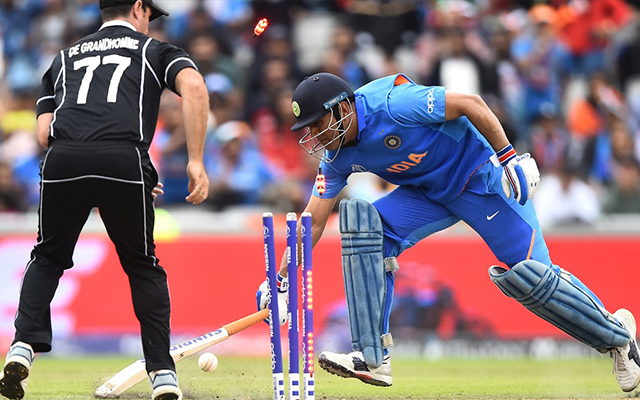

The MCC stated that the 'complete control' requirement applies only when a fielder breaks the wicket using their hand or arm while holding the ball. If the ball hits the stumps directly, whether deflected by a bowler, ricocheted off a wicketkeeper's pads or kicked onto the stumps, no control requirement applies and the run-out stands. Non-striker run-outs remain fully valid under the new law.
The rule change itself was first announced in February 2026 and forms part of the MCC's 2026 edition of the Laws of Cricket, which includes 73 material revisions and represents the first major update since 2022.
"Although this Law change has been public since February, when the Laws came into force last week a number of people appear to have misinterpreted it," the MCC said in its statement as quoted by NDTV Sports.
What exactly did fans misunderstand about the new rule?
Confusion spread quickly after October 1, 2026, when the new laws came into force in international cricket. Fans speculated that scenarios such as a bowler deflecting the ball onto the stumps, the ball bouncing off a wicketkeeper's pads, or the ball being kicked onto the stumps would no longer result in run-outs under the updated law.
"There has been a suggestion that 'for all run outs, the fielder has to have complete control of the ball', which has led to questions about bowlers deflecting the ball onto the stumps, or it bouncing off a wicket-keeper's pads, or being kicked onto the stumps - and there's been some disquiet about a new Law saying you need complete control for any Run out," the MCC said.
"Fortunately, that's not what the Law says, and that's not what you'll be seeing in cricket going forward in these new Laws and Playing Conditions. This Law applies to when a fielder is breaking the wicket with their hand or arm, while holding the ball. In that circumstance, they need to have the ball in their hand, and with complete control, to be able to break the wicket," it added.
3 things India must fix after Ranchi T20I defeat
Why did the MCC introduce the complete control requirement?
The MCC explained the reasoning behind the specific change to the hand-or-arm run-out provision. Advances in broadcast technology had made it increasingly apparent that batters were being dismissed in circumstances where the fielder had minimal control of the ball at the moment of breaking the wicket.
"The reason for the change is that improved TV coverage has highlighted that some batters were being given out when the fielder was in contact with the ball when breaking the wicket, but had little or no control of the ball. This is not the same as 'holding the ball', which is what the Law has always required," the MCC said.
Under the updated law, a fielder must genuinely hold the ball with complete control when using their hand or arm to break the wicket. The law does not alter the position for run-outs where the ball strikes the stumps without a fielder's hand or arm being involved. The MCC's 2026 revision package, which took effect on October 1, 2026, covers 73 material changes in total, making it the most comprehensive update to the Laws of Cricket since 2022.
Get every cricket updates! Follow Us:


Download Our App