Why the umpires were correct to reverse the call in the Japan vs India T20I
A controversial wide call in the final over of a rain-reduced T20I between Japan and India sparked debate, but the ICC guidelines made the right outcome clear.
3 Min Read
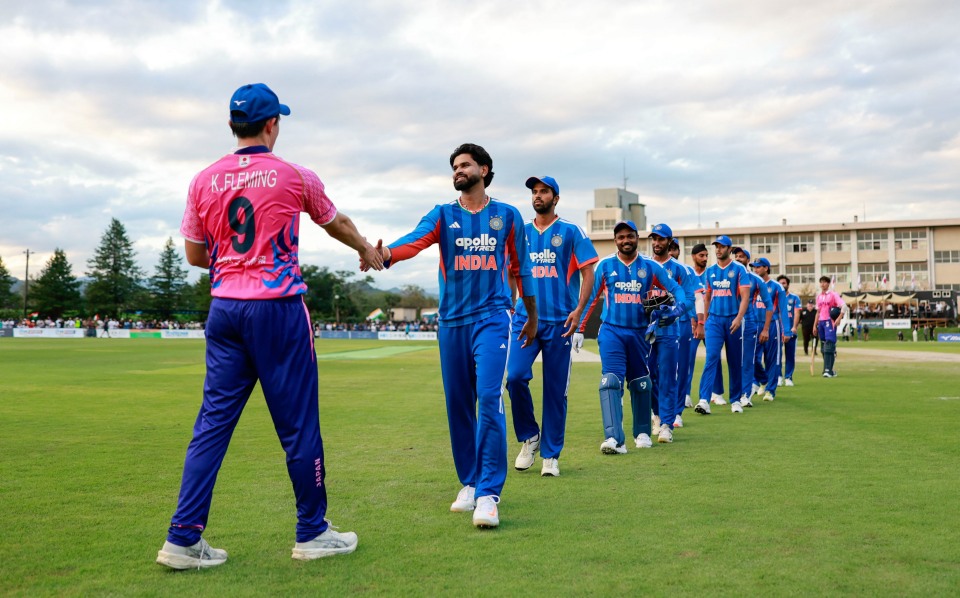

The reversal of a wide call in the final over of a rain-reduced T20I between Japan and India generated significant debate. The match in Sano was reduced to five overs a side because of rain, and Japan needed eight runs off four balls to pull off an upset on a pitch with excessive moisture exposed to the sun.
Left-hand batter Alexander Shirai-Patmore attempted a reverse-hit against Axar Patel. He was beaten comprehensively and the ball passed down what would have been his leg side had he remained in his normal stance. Striker's end umpire Chris Thurgate, a Japan-based official who had stood in 17 T20Is before this match, called it a wide. An identical piece of action on the very next ball produced another wide call from Thurgate, which left Indian players visibly frustrated.
Leg umpire Chris Brown from New Zealand, a member of the ICC's Elite Panel, then stepped in and asked Thurgate to correct the second decision. Thurgate complied. The equation moved back to seven runs off three balls, and India went on to win by two runs, setting the record for the lowest total defended in T20 cricket.
What do the ICC guidelines say about wides when a batter switches stance?
The ICC has issued clear written guidelines to all its umpires on this exact situation. When a batter attempts a reverse-hit or a switch-hit, both sides of the wicket are to be treated as the off side for the purpose of adjudicating wides. Under this guideline, a delivery must travel 75 centimetres wide of the outer stump to be called a wide, regardless of which side of the wicket it passes.
The guideline covers both a reverse-hit, where the batter does not change grip, and a switch-hit, where the grip changes. It also states that even if a batter pretends to change stance and then reverts to the normal stance, both sides are still deemed to be off side. The logic behind the rule is straightforward: by switching stance, a batter brings deliveries on the leg side within reach and therefore those deliveries cannot be considered wide. Based on this information, the wide call being reversed was the correct decision.
A further point of debate was whether the timing of Shirai-Patmore's stance change mattered, given that he moved after Axar had already released the ball. The guidelines address this directly, stating that the timing of the move makes no difference to the advantage gained by switching sides. Once a batter switches, both sides are treated as off side for the purpose of calling wides.
Was the umpire within his rights to reverse the decision mid-over?
This match had no television umpire and no Decision Review System. In the IPL, DRS allows teams to challenge wide calls, but that facility was not available here. However, an on-field umpire retains the right to change a decision before the next ball comes into play, and that is precisely what happened when Brown intervened after the second wide call.
The first wide call was also incorrect under the same guidelines, but it is possible that the initial call took everyone, including Brown, by surprise and there was insufficient time to intervene before the next delivery was bowled. The fact that the first mistake was allowed to stand does not provide justification for repeating it on the following ball. Brown's intervention on the second call was therefore both permissible and correct under the laws of the game.
Get every cricket updates! Follow Us:


Download Our App