'I don't believe in confidence' - Coach Rathour stresses on self-belief as Sri Lanka prepare for Super Eights
“I don't believe in confidence actually because confidence goes with the results. I think as players or as a team you need to have self-belief..." Rathour said.
3 Min Read
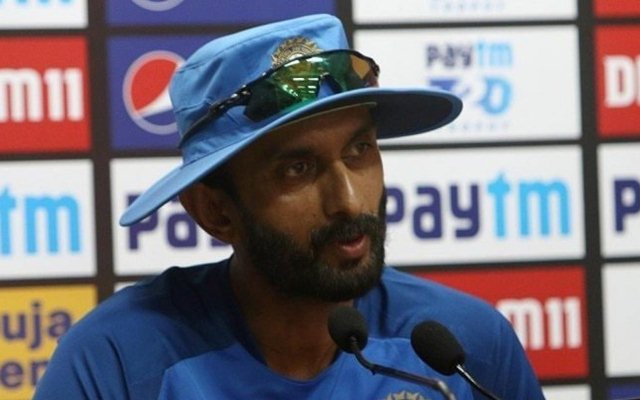

Sri Lanka’s smooth passage into the Super Eight stage of the ICC Men’s T20 World Cup 2026 has been driven as much by clarity of thought as by runs on the board, according to their batting coach Vikram Rathour. Rather than reading too much into recent results, Rathour has stressed continuity, insisting that the foundations of the team’s success were laid well before the tournament began.
Speaking ahead of Sri Lanka’s final group match against Zimbabwe, Rathour made it clear that the coaching group never felt the need to course-correct, even after difficult phases such as the whitewash in England earlier in the year.
“As far as sorting out the issues, I don't think there were any issues anyway. As a team you have some good games, you won't have good games on some days. As long as you are focused on the areas that you need to work on. I was not really too concerned with the results in the England series. Nothing really has changed [since then]. We are still preparing the way we were,” Rathour said as quoted by ESPNcricinfo.
That sense of calm has translated into decisive batting performances during the group stage. Pathum Nissanka, who arrived at the tournament without a major score in his previous five innings, responded with a commanding hundred against Australia, while Kusal Mendis provided consistency from the outset, opening the campaign with three consecutive half-centuries.
Rathour pointed to execution rather than inspiration when reflecting on those performances.
“Yeah, very impressive. We played, I think, almost the perfect batting innings. Pathum played one of the better T20 knocks that you'll see. And Kusal has been very consistent, and he's been doing that for us again and again. Again, Pawan [Rathnayake] was really good [too]. So, everything went to plan,” Rathour said.
Rathnayake’s emergence has added another dimension to Sri Lanka’s middle order. Despite being early in his T20I career, he has already produced impactful innings, including a rapid 60 against Oman and an unbeaten 28 against Australia.
“My input has been pretty simple. He's a terrific player against spin. He uses his feet really well, he can play the angles and that's what he's doing. One honest conversation with him was about intent, keep the intent going, even when he's playing fast bowlers. If you get a ball which should be hit, you need to hit that ball, whether it's the first ball of the innings or whether it's the tenth ball of the innings. I think he has taken that on board,” he added.
Rathour also offered insight into his broader outlook on performance pressure, drawing a distinction between confidence and self-belief.
“I don't believe in confidence actually because confidence goes with the results. I think as players or as a team you need to have self-belief or self-esteem which is more important. Even if Pathum scores two zeroes, he's still a terrific player. That fact does not change,” he quoted.
The same thinking underpins Sri Lanka’s selection approach. With Kamil Mishara competing for a place alongside the experienced Kusal Perera, Rathour emphasised the need for patience.
“[Mishara] is a quality player, but there were a few games now that sometimes the form comes into question, and KJP also is I think a quality player who can play a very impactful knock. So just wanted to see where he stands, and what he can bring to the table. We played him one game and one failure doesn't change anything. We'll be looking to give him more opportunities, and we are hoping that he comes good,” he added.
As the tournament shifts from Pallekele to Khettarama, where batting is expected to demand greater adaptability, Rathour again rejected the idea of framing conditions negatively.
“I've read a great line, somebody has said, that these are not tough conditions, these are just different conditions. If you start thinking tough conditions, then you start going into a negative space of mind. We have enough skill in our batting unit to adapt to this,” he concluded.
Get every cricket updates! Follow Us:


Download Our App