'Take the pressure off, not add to it' - Albie Morkel gives sneak peek into coaching philosophy
The former South Africa all rounder outlines his philosophy of backing players, avoiding technical overload during tournaments, and trusting experience ahead of the Super Eight stage.

4 Min Read
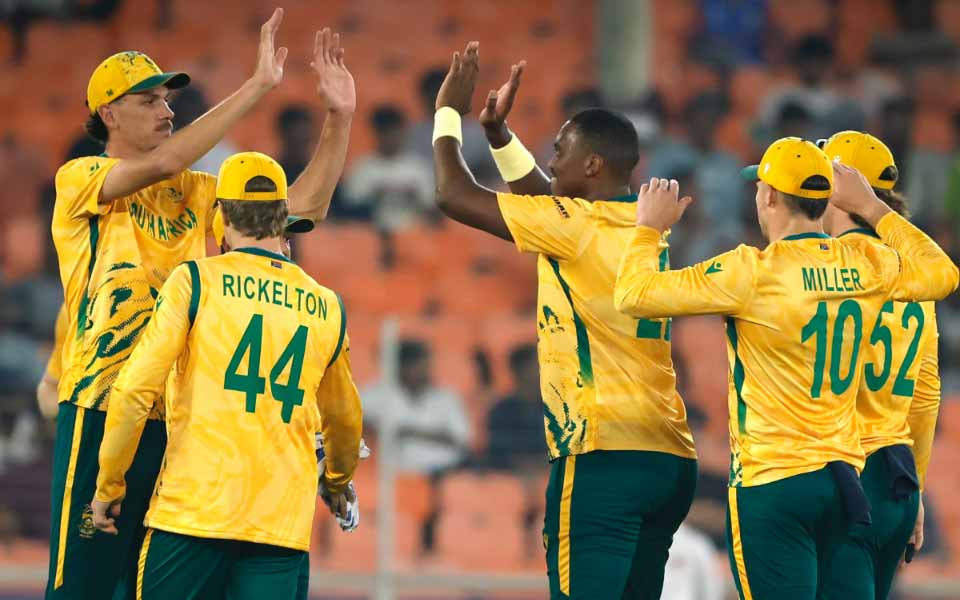

More than a decade after stepping away from international cricket, Albie Morkel still thinks like a player. Now part of South Africa’s setup as a specialist coaching consultant, the former all-rounder admits that the transition required a conscious mental shift.
“When I started my coaching career, I coached as a player. You want to make a difference on the field and you can't. You have to accept that fact (that you're not on the field) and work that way. Playing is about being under pressure anyway. If you're a coach, you want to make a difference in the game all the time, and that doesn't help,” Morkel said as quoted by ESPNcricinfo.
Once Morkel moved past the urge to get to the top of his bowling mark, his outlook evolved. Coaching, he realised, was not about absorbing pressure but about deflecting it, particularly in high stakes tournament environments where players are already operating at the edge.
“It's about finding that middle ground where you try to help, where you take pressure off the players,” Morkel said.
That belief now shapes his day-to-day approach with the squad, even when it means doing less rather than more. For Morkel, the temptation to intervene technically during a tournament is one that must be resisted.
“My philosophy is that once you're here and you start thinking about technical stuff, that's when you confuse players. It's more about how I can actually take the pressure off them and make them believe in themselves. The players know what they're doing. If it's really serious technical stuff, they need to work on it, but not during tournaments,” he explained.
This philosophy is perhaps best illustrated by South Africa’s handling of Dewald Brevis. Despite Brevis’ visible discomfort against the short ball and modest returns of 50 runs in three innings so far, the coaching staff have resisted the urge to intervene.
“We feel that if we ask him to play a certain way, we'll take away the X factor. He's going to break your heart at some stage, but he's also going to win you games. So, the best way for us is just to let him be that guy,” Morkel said.
In the broader context of South Africa’s campaign, that is a manageable issue. The rest of the batting line up has delivered consistently, and Brevis, at his first major ICC tournament, is viewed as a long-term investment.
A similar approach applies to Kagiso Rabada. The senior fast bowler has taken two wickets in three matches so far, with his most notable moment coming when he overstepped during a dramatic double Super Over contest against Afghanistan. Yet from the coaching perspective, there is no cause for alarm.
“It's not a concern. I think if you look around T20 cricket, that can happen to any bowler at any stage, where the pressure just gets to you and you maybe have a day like that. But he's still our premier fast bowler and we're going to double down on him and back him all the way. That's the only way to go now. If you get too tactical or technical with guys like that, who know what they're doing, you can confuse them. So, for him, it's just accept that performance, move forward and be better next time,” Morkel said.
That next time may not even come immediately. With South Africa already through to the Super Eight stage, the final group fixture against UAE could be used to provide opportunities to players such as Jason Smith, Kwena Maphaka and Anrich Nortje.
The real examination will arrive when the knockout phase begins, starting with a high-profile clash against India in Ahmedabad.
“There will be more pressure in those games as you move towards the playoffs. We've got a very experienced group who have been exposed to pressure, whether it's in the IPL or other leagues. International cricket is a little bit different, but these are guys who can handle that pressure. They actually thrive in circumstances where there's a bit more on the line, so I'm not too worried,” Morkel said.
Morkel, who featured in five T20 World Cups, faced India at every edition, including the inaugural tournament when the format was still establishing itself. Since then, T20 cricket has transformed the global landscape and opened new coaching pathways.
After retiring in 2018, Morkel worked across the Titans, Chennai Super Kings and Joburg Super Kings setups before joining South Africa’s national structure under Shukri Conrad. His time alongside Stephen Fleming has been particularly influential.
“He is one of the only coaches, maybe the only coach in the world, who has been at that franchise for 17 years, so he must be doing something right,” Morkel said.
Morkel hopes to apply similar clarity and continuity in his own coaching journey, especially in a format where pressure is constant and the smallest margins can define success.
Get every cricket updates! Follow Us:


Download Our App